Integrating Tiger Fingers Into Your Creative and Professional Workflows
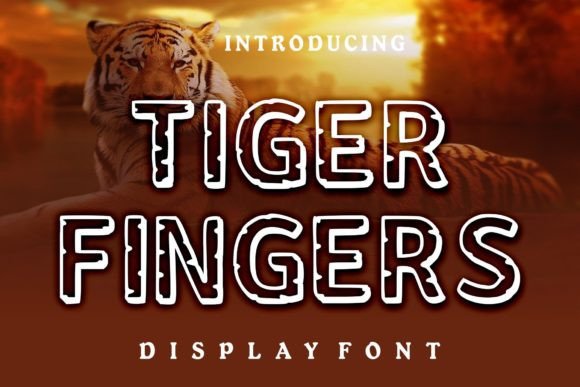
In the landscape of digital typography, finding a typeface that balances distinct personality with functional versatility is often a challenge for designers and content creators. Tiger Fingers emerges as a solution to this common friction point. As an outline font that conveys impeccable coolness, it serves not merely as a decorative element but as a strategic asset in visual communication. Whether you are designing for crafts, digital interfaces, corporate presentations, or personalized greeting cards, understanding how to integrate this typeface into your broader workflow can significantly enhance the impact of your final output.
The utility of Tiger Fingers extends beyond its aesthetic appeal. For professionals aged 20 to 50, including marketers, educators, and small business owners, the choice of typography is a critical decision that affects brand perception and user engagement. This article explores the practical implementation of Tiger Fingers, focusing on preparation, compatibility, and execution within various creative and business processes.
Understanding the Role of Outline Typography in Design Strategy
Before implementing any new asset, it is essential to understand its functional role. Outline fonts like Tiger Fingers occupy a unique space in design hierarchy. Unlike solid block fonts, which demand immediate attention through weight and density, outline fonts create visual interest through negative space and contour. This characteristic makes them ideal for headlines, logos, and accent text where the goal is to evoke a specific mood—in this case, "impeccable coolness"—without overwhelming the viewer.
When planning a project, consider where Tiger Fingers fits in the visual hierarchy. It is rarely suitable for body text due to readability constraints inherent in outline styles. Instead, it functions best as a primary visual anchor. In a marketing workflow, this might mean using it for campaign headers or social media graphics. In an educational context, it could serve to highlight key concepts in presentation slides. Recognizing this limitation early in the planning phase prevents costly revisions later in the production process.
Pre-Production: Preparation and Compatibility Checks
Successful integration of any digital asset begins with technical preparation. Before committing to Tiger Fingers for a client project or personal endeavor, verify compatibility with your existing software stack. Most modern design platforms, including Adobe Creative Cloud applications, Canva, and Microsoft Office suites, support standard font formats. However, ensuring that the font file is correctly installed and recognized by your operating system is a crucial first step.
- File Format Verification: Ensure you have the correct file format (OTF or TTF) for your specific use case. OTF is generally preferred for professional design work due to its advanced typographic features.
- Licensing Review: Always check the licensing agreement. Determine if the font is free for personal use, requires a commercial license, or has restrictions on redistribution. This step is vital for entrepreneurs and freelancers to avoid legal complications.
- Pairing Analysis: Identify complementary fonts. Since Tiger Fingers is an outline style, it pairs well with clean, sans-serif body fonts. Pre-selecting these pairings streamlines the design process.
Organization is another key factor in pre-production. Establish a consistent folder structure for your assets. Storing Tiger Fingers alongside other brand-specific resources ensures quick access during high-pressure deadlines. This habit reduces friction and maintains workflow efficiency, allowing you to focus on creative execution rather than asset management.
Execution: Applying Tiger Fingers Across Different Mediums
The versatility of Tiger Fingers allows it to adapt to various mediums, each requiring a slightly different approach to implementation. Below are practical examples of how to apply this font in real-world scenarios.
Digital Design and Social Media Marketing
In digital environments, screen resolution and loading times are critical considerations. When using Tiger Fingers for social media graphics or web banners, ensure that the outline stroke width is sufficient to remain visible on smaller mobile screens. Thin outlines may disappear or appear pixelated on low-resolution displays. Test your designs across multiple devices to guarantee consistency.
For marketers, the "cool" aesthetic of Tiger Fingers can help differentiate brand messaging in crowded feeds. Use it sparingly to highlight value propositions or call-to-action buttons. The contrast between the playful outline style and a minimalist background can draw the eye effectively, increasing click-through rates.
Print Materials and Crafts
When transitioning from digital to print, such as in greeting cards or craft projects, physical materials interact differently with typography. For crafts, Tiger Fingers can be used as a template for cutting vinyl, paper, or fabric. The clear contours of the outline font make it easy to trace and cut, reducing manual effort and improving precision.
For printed materials, pay attention to ink coverage. Outline fonts use less ink than solid fonts, which can be cost-effective for large-scale printing. However, ensure that the paper quality supports fine lines. Rough or textured papers may cause the outlines to break up, diminishing the font's crisp appearance. Conduct test prints on your chosen substrate to verify quality before full production.
Corporate Presentations and Educational Content
In professional settings, maintaining a balance between creativity and professionalism is key. Tiger Fingers can add a touch of modernity to corporate presentations without sacrificing clarity. Use it for section dividers or title slides to break the monotony of standard corporate templates. For educators, it can make learning materials more engaging for students, particularly in subjects that benefit from a relaxed, approachable tone.
When creating presentations, consistency is paramount. Define a style guide that specifies exactly how and when Tiger Fingers is used. This ensures that all team members produce cohesive materials, reinforcing brand identity and professional standards.
Workflow Integration and Efficiency Tips
Integrating a new font into your routine should enhance, not hinder, your productivity. Here are several strategies to streamline the use of Tiger Fingers in your daily workflow:
- Create Templates: Develop reusable templates in your most frequently used software. Include pre-set text boxes with Tiger Fingers applied, along with recommended color palettes and spacing settings. This reduces setup time for new projects.
- Standardize Color Codes: Outline fonts often rely on color contrast for impact. Define a set of standard hex codes or CMYK values that work well with Tiger Fingers. Save these in your software’s swatch library for quick access.
- Batch Processing: If you are creating multiple assets, such as a series of social media posts or greeting cards, use batch processing tools to apply the font consistently. This ensures uniformity and saves time on manual adjustments.
- Feedback Loops: Incorporate feedback stages into your workflow. Share drafts with colleagues or clients to gauge the effectiveness of the typography. Use this input to refine your application of Tiger Fingers in future projects.
Quality control is an ongoing process. Regularly review your outputs to ensure that the font is being used appropriately and effectively. Look for signs of misuse, such as poor legibility or inconsistent spacing, and address these issues promptly. Maintaining high standards ensures that Tiger Fingers continues to add value to your work.
Long-Term Use and Brand Consistency
For small business owners and entrepreneurs, typography is a core component of brand identity. Once you decide to incorporate Tiger Fingers into your brand assets, commit to consistent usage. Inconsistency can dilute brand recognition and confuse your audience. Document your usage guidelines in a brand style guide, detailing acceptable contexts, prohibited uses, and technical specifications.
Over time, monitor the performance of your designs. Analyze metrics such as engagement rates, conversion rates, and customer feedback to assess the impact of your typography choices. If Tiger Fingers contributes positively to these outcomes, continue to leverage its strengths. If not, be prepared to adjust your strategy. Flexibility and data-driven decision-making are essential for long-term success.
In conclusion, Tiger Fingers is more than just a stylish outline font; it is a versatile tool that can enhance various aspects of your creative and professional workflows. By understanding its characteristics, preparing thoroughly, and integrating it strategically, you can unlock its full potential. Whether you are crafting a heartfelt greeting card, designing a compelling marketing campaign, or delivering an impactful presentation, Tiger Fingers offers the impeccable coolness needed to stand out in a competitive landscape. Embrace the process, maintain consistency, and let this font elevate your visual communication.